Step
Requirement & Reference Study
Fit, function, materials and constraints defined before any geometry is drawn.
Injection molded plastic part design for consumer products and hardware, with wall thickness, draft angles, snap-fit geometry and rib structure resolved from the concept stage instead of discovered by a mold maker.
Every stage produces a clear decision, review point or manufacturing deliverable.
Fit, function, materials and constraints defined before any geometry is drawn.
Parametric modeling reviewed early for moldability, machinability and assembly.
Full assemblies, tolerancing, and FEA/thermal validation where load or heat matter.
Dimensioned packages, flat patterns, BOMs and tolerance callouts a supplier can quote.
Prototypes confirm fit and function, then final files are packaged for production.
The portfolio example shows how the same engineering decisions appear in completed work.
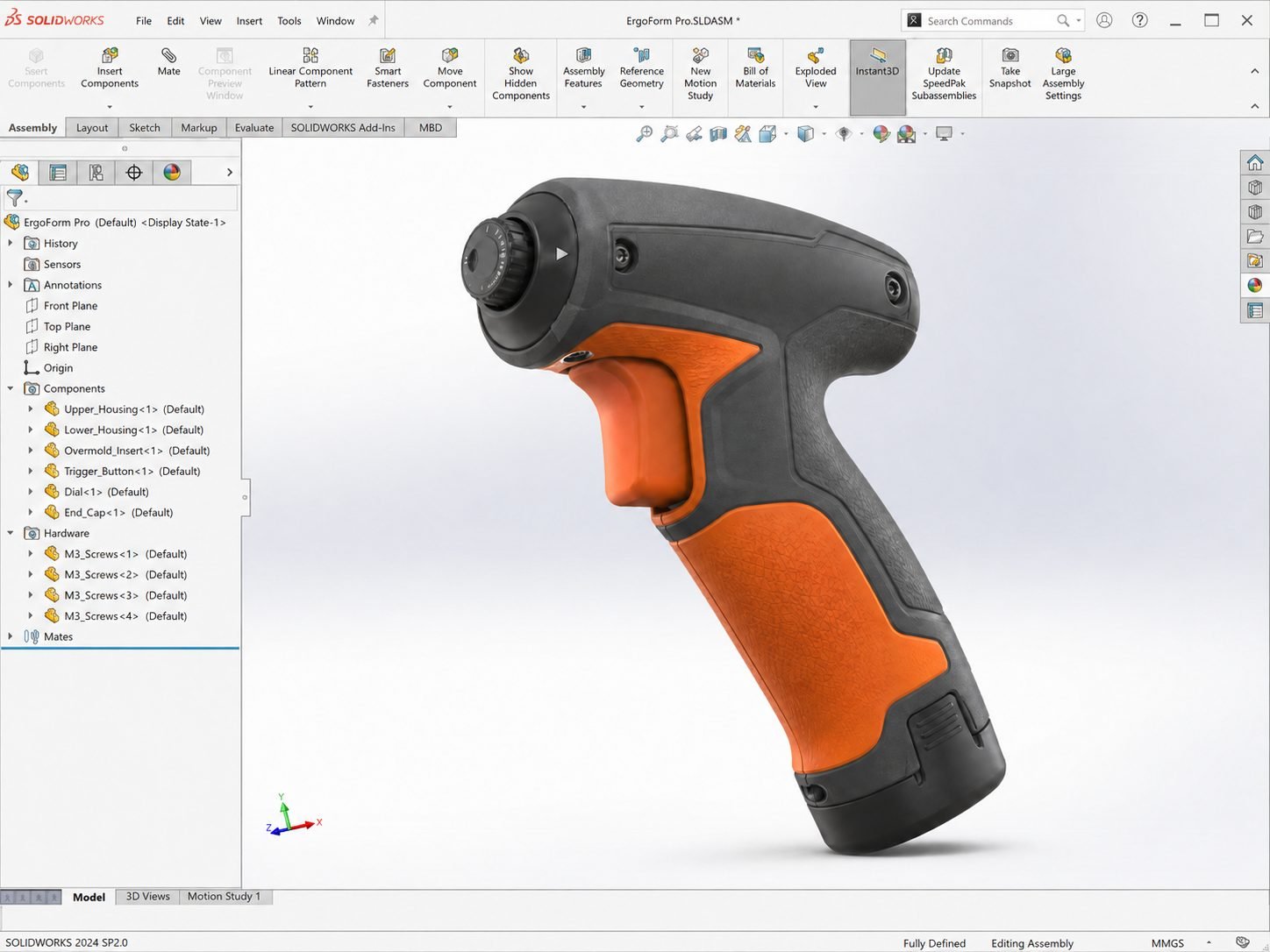
A pistol-grip handheld power tool housing built around an overmolded soft-touch grip, rotary dial, trigger button, PCB mount plate, battery pack and exploded release drawing for supplier handoff.
View portfolioYes, designing around a specific mold maker's process, tooling constraints and preferred conventions is standard when that information is available.
Material and process recommendations are part of the deliverable, based on the part's function, cosmetic requirements and cost target.
Yes, diagnosing why an existing molded part is cracking, warping or not sealing, and redesigning around the root cause, is a common project type.
Snap-fit and living-hinge design, including cycle-life considerations so the fit does not degrade after repeated use, is a core part of this service.
Yes, the goal is a package a mold maker can quote and tool from directly, not a concept model that still needs translation.
Use these pages to compare scope and deliverables before combining services into one project.
I'll review the available information and suggest a practical first milestone.